Intellectual Property

Washington Redskins vs. Native Americans & Trademark Squatters

2020-09-29T23:33:20-04:00July 30th, 2020|Intellectual Property, Trademark|

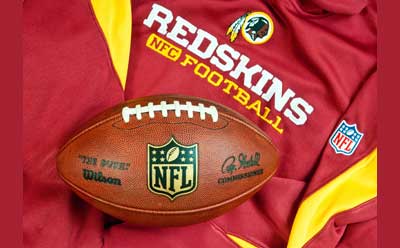
For almost 30 years, the NFL's Washington Redskins were involved in litigation over their team name.  They recently decided to change the name, but they may now have to battle trademark squatters who have scooped up rights to likely replacement names. The Washington Redskins have been using the team name since 1933, and registered variations of the trademark starting in 1967.  In 1992, Native American activist Suzan Harjo and other plaintiffs filed a petition to cancel six trademark registrations owned by the Redskins' parent company, Pro-Football, Inc., on the grounds that the name "Redskins" was offensive to Native Americans. They [...Read More...]
Netflix and the Air Force Battle for Space (Force)

2021-06-29T14:56:47-04:00June 29th, 2020|Intellectual Property, Trademark|

In a story that would make a screenwriter jealous, it seems that the newly-minted U.S. Space Force may have lost trademark rights in the term "Space Force" to Netflix. On June 18, 2018, President Trump announced the U.S. Space Force which came to life on December 20, 2019, with the signing of the National Defense Authorization Act for Fiscal Year 2020, as a division of the Air Force. Netflix debuted its "Space Force" comedy series on May 29, 2020. The problem for the Air Force is that Netflix filed its earliest trademark application for "Space Force" on August 2, 2018, in Jamaica. [...Read More...]

Copyright Law Doesn’t “Heart” New York

2021-08-24T10:31:12-04:00May 29th, 2020|Copyright, Intellectual Property, Trademark|

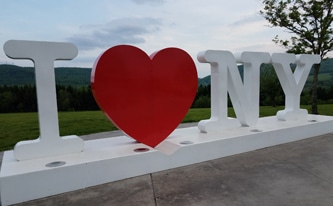
Why is the famous "I [heart] New York" logo protected by trademark and not copyright? At first glance, you'd think that it's artwork, and therefore can be protected by copyright. However, the Copyright Act protects "original works of authorship." The "I [heart] New York" logo is simply the phrase "I love New York", with the word "love" replaced by a red heart. As the Supreme Court held in Feist Publications, Inc. v. Rural Telephone Service Co., [t]he sine qua non of copyright is originality. To qualify for copyright protection, a work must be original to the author. … Original, as [...Read More...]

Post a Photograph to Social Media and License it to the World?

2020-04-30T04:00:50-04:00April 30th, 2020|Contracts, Copyright, Intellectual Property|

Authors, beware! The next time you post your work on social media, you may lose significant ownership rights. A core principle of U.S. copyright law is that the author controls how their work is used, and can earn money from that use if they wish. But what happens when a photographer posts her work on Instagram and a large corporation uses it without compensating the photographer? This is exactly what happened to Stephanie Sinclair, a Pulitzer Prize-winning photojournalist, who has been published in National Geographic and the New York Times Magazine. On September 22, 2015, Sinclair posted a photo to [...Read More...]

During coronavirus, Pennsylvania issues first ethics opinion for lawyers working remotely

2020-10-30T14:52:18-04:00April 13th, 2020|Intellectual Property, Privacy|

Pennsylvania has long been a leader in ensuring that its lawyers can use technology responsibly and ethically.  The 2011 Pennsylvania Bar Association (PBA) opinion on cloud computing was among the first of its kind across the country, preceding the American Bar Association (ABA)'s efforts by six years. Today, the PBA distributed its April 10, 2020 opinion on "Ethical Obligations for Lawyers Working Remotely".  In this Formal Opinion 2020-300, it cites its 2011 cloud computing opinion and cites the ABA's 2017 opinion, while building on both.  Some key takeways: From the 2011 opinion: Cloud computing is allowed, as long as the [...Read More...]

Force Majeure Clauses and the Coronavirus Pandemic

2020-03-27T22:21:17-04:00March 27th, 2020|Contracts, Intellectual Property|

A month ago, we were at work and school.  Grocery stores were full of toilet paper, hand sanitizer, flour, and milk.  “Flattening the curve” meant that I needed to lose a few pounds.  The coronavirus (COVID-19) pandemic has now swept through the United States like a hurricane.  Businesses have been shuttered, supply chains are stretched or broken, and employees are required to work at home – if they haven’t been laid off completely. During this pandemic, what do you do if your business can’t pay its rent, ship an order, or otherwise fulfill contractual obligations?  Most business contracts include a [...Read More...]

Have DMCA Takedowns Gone Rogue?

2020-03-03T19:22:37-05:00March 3rd, 2020|Copyright, Intellectual Property|

In 1998, the Digital Millennium Copyright Act (DMCA) became law. That year, Chumbawamba's "Tubthumping" topped the charts, Mark McGwire broke the home run record, Google, Inc. was formed, and smartphones didn't yet exist. The Web was in its infancy, but online service providers were concerned about their potential liability for hosting users' content. The DMCA added a new section 512 to the Copyright Act, limiting the liability for online service providers who hosted unmodified user content, adopted methods to terminate access to repeat copyright infringers, didn't interfere with copyright protection technology, and complied with copyright owners' requests to remove infringing material. This [...Read More...]

Google v. Oracle – the Supreme Court’s copyright case of the decade?

2020-07-31T00:05:22-04:00January 30th, 2020|Copyright, Intellectual Property|

Photo by Mr. Kjetil Ree. [CC BY-SA] Newsweek has called it the "copyright case of the decade" and they may be right.  Google and Oracle are software titans battling over whether the freely available connections between software platforms (Application Programming Interfaces, or "APIs") can be protected by copyright law. What's an API? APIs are bits of software code which enable developers to quickly and easily build programs that integrate with a specific platform or piece of software, saving the developer from needing to write the code for commonly-used functions.  For example, both Android and iOS have APIs that enable [...Read More...]

The KosherSwitch Patent: Protecting malfunction by design

2019-12-27T19:19:49-05:00December 27th, 2019|Intellectual Property, Patent, Trademark|

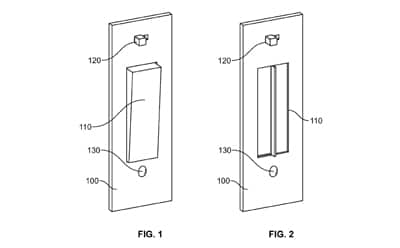
Here's a challenge for these modern times:  How do observant Jews follow the Biblical commandment to observe the Sabbath?  Rabbis generally agree that driving is prohibited, and that using electricity is not prohibited - but using switches to manually turn the flow of electricity on or off is prohibited.  This is why you may have seen refrigerators or ovens with a "Sabbath mode", which prevents certain functions from working on the Sabbath.  By contrast, light switches don't have such a mode; they are either on or off. Which brings us to the KosherSwitch and the concept of random chance.  In [...Read More...]

No, You Can’t Trademark “OK Boomer”

2020-10-30T15:00:26-04:00November 20th, 2019|Intellectual Property, Trademark|

You may have heard that the generational battle between "milennials" and "baby boomers" now has a catch phrase: "OK Boomer".  It's a dismissive phrase by those darn youngsters who are loitering on your lawn and forgetting to pull up their pants.  I'm kidding about the loitering and the pants, but the catchphrase is a real thing, and it's also become a meme.  If you don't know what a meme is, then chances are that you're a boomer and may be more interested in other articles on this site instead.  But I digress. "OK Boomer" has become so popular that there's [...Read More...]

Go to Top