Privacy

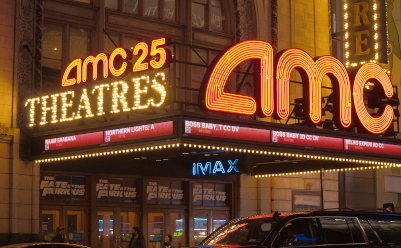
AMC to Pay $8 million for Disclosing Users’ Viewing Histories

2024-02-20T14:50:21-05:00February 16th, 2024|Privacy|

The 1998 Video Privacy Protection Act is very much alive and well. It was originally passed in response to Judge Bork’s video rental history being shared with the public during his unsuccessful Supreme Court nomination hearings, and it also applies to modern-day streaming services. Of course, data brokers and advertisers can still monetize the heck out of your data; that’s just the American way… https://arstechnica.com/tech-policy/2024/02/amc-to-pay-8m-for-allegedly-violating-1988-law-with-use-of-meta-pixel/ Photo 178262595 | Amc © Erik Lattwein | Dreamstime.com
Josh Waterston is Now a Certified Information Privacy Professional (U.S.)

2024-02-19T22:24:40-05:00December 29th, 2023|Privacy|

I am pleased to announce that I am now a Certified Information Privacy Professional (U.S.), a certification provided by the International Association of Privacy Professionals. My firm and I regularly advise clients on privacy matters. I’ve drafted privacy policies and privacy statements, and have advised clients on biometric privacy requirements, texting and telemarketing requirements, and more. I work on client agreements where the parties have to protect personal data, including sensitive personal data (including PHI). I’ve also written and spoken about how intellectual property and artificial intelligence developments will affect our clients. At Wilftek, we help our clients create new [...Read More...]

Supreme Court Fights Abuses of the Computer Fraud & Abuse Act

2022-06-28T15:03:21-04:00June 29th, 2021|Contracts, Intellectual Property, Privacy, Trade Secrets|

For 35 years, the Computer Fraud and Abuse Act (CFAA) has been a powerful weapon in law enforcement's arsenal against computer hackers. Essentially, it criminalized the standard definition of hacking - accessing information on a computer, where the user lacks authorization to do so. But what happens when someone is authorized to access the information, but then misuses the information? For example, a police officer who accepted a bribe and then accessed a vehicle database for non-law-enforcement purposes? This was the situation in Van Buren v. United States, which was decided by the U.S. Supreme Court on June 3, 2021. [...Read More...]

Keeping Up with Fast-Changing Privacy Laws

2021-08-31T17:50:47-04:00November 24th, 2020|Intellectual Property, Privacy|

How much personal data do you collect from customers, and what privacy laws apply to your business? Recent privacy violations have resulted in penalties of thousands or millions of dollars, with Facebook paying a record FTC fine of $5 billion. Every business needs to know its compliance requirements and potential exposure. Yet the current proliferation of privacy laws has made this increasingly expensive and difficult. The nexus of these laws is the need to protect the ever-increasing amount of data that businesses collect from customers. While certain categories of data are already highly regulated (for example, banking or health records), [...Read More...]

During coronavirus, Pennsylvania issues first ethics opinion for lawyers working remotely

2020-10-30T14:52:18-04:00April 13th, 2020|Intellectual Property, Privacy|

Pennsylvania has long been a leader in ensuring that its lawyers can use technology responsibly and ethically.  The 2011 Pennsylvania Bar Association (PBA) opinion on cloud computing was among the first of its kind across the country, preceding the American Bar Association (ABA)'s efforts by six years. Today, the PBA distributed its April 10, 2020 opinion on "Ethical Obligations for Lawyers Working Remotely".  In this Formal Opinion 2020-300, it cites its 2011 cloud computing opinion and cites the ABA's 2017 opinion, while building on both.  Some key takeways: From the 2011 opinion: Cloud computing is allowed, as long as the [...Read More...]

Go to Top